| 
Euro Fed
Lipid Newsletter July 2010: EJLST impact on record height
Dear
colleagues, 1.83!
This cannot be the score of any World Cup game but it is the just
released Thomson Reuters Impact Factor (IF2009) of the European Journal
of Lipid Science and Technology (www.ejlst.com),
which has now increased to 1.83! This
represents about 35% increase relative to 2008 (IF2008=1.35) and almost
double from 2007 (IF2007=0.91). This Impact Factor, based on the number
of citations of articles published in 2007-2008, is a measure of
performance of the journal, and is affected by the quality of the
published articles, the efficacy of the journal's marketing and
publishing strategy, and the performance of the whole research field.
The
significance of an Impact Factor can be debated, but it is clear that
more citations also mean higher prestige for lipid science, EJLST, and
the Euro Fed Lipid in particular! We have high hopes that the
scientific
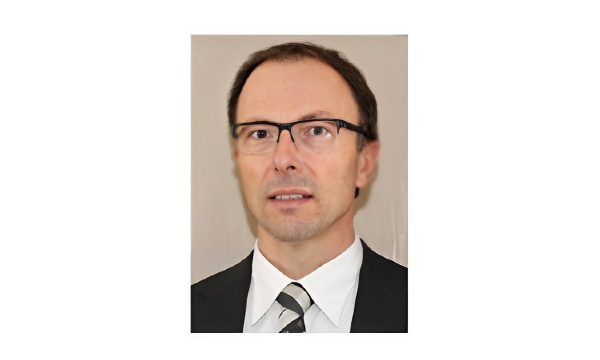
quality of EJLST will further increase with Editor-in-Chief Uwe
Bornscheuer (since 2008) and the renewed Editorial Board.
The
IF truly reflects an increase in the impact you, the authors, are
making in the lipid research field! Congratulations!
 |  | Lucie Kalvodova Assistant
Editor | Barbara
Janssens Managing
Editor |
European Journal of Lipid Science and Technology www.ejlst.com |
| Euro Fed
Lipid Congress 2010 | |
| |
| |
|
| Munich: Famous
for the Oktoberfest | |
|
Oktoberfest
is a 16-day festival held each year in Munich, running from late
September to early October. It is one of the most famous events in
Germany and the world's largest fair, with some six million people
attending every year. The Oktoberfest is an important part of Bavarian
culture.
Visitors eat huge amounts of traditional
hearty fare such as Hendl (chicken), Schweinsbraten (roast pork), Haxn
(pork knuckle), Steckerlfisch (grilled fish on a stick), Würstl
(sausages) along with Brezel (Pretzel), Knödeln (potato or bread
dumplings), Sauerkraut or Blaukraut (red cabbage) along with such
Bavarian delicacies as Obatzda (a fatty, spiced cheese-butter
concoction) and Weisswurst (a white sausage).
The original
"Oktoberfest" occurred in Munich, on October 18, 1810: For the
commemoration of their marriage, Crown Prince Ludwig (later King Ludwig
I) and Princess Therese of Saxe-Hildburghausen (namesake of the
Theresienwiese festival grounds) organized a great horse race.
By
1960, when the tradition of horse races ended, the Oktoberfest had
turned into an enormous world-famous festival. After this foreigners
began to picture Germans as wearing the Sennerhut, Lederhosen, and the
girls in Dirndl.
Today, the 6.2 million visitors consume
roughly 6,940,600 litres beer, 521,872 chicken and 104 oxen,
among other food and drinks. |  Photo:
Wikipedia,
user Michael Chlistalla |
|
| |
oils+fats: Europe's
No. 1 event for the industry | |
| What
you can expect from oils+fats
2011
- 70
exhibitors from 20 countries
- 1.300 visitors from
60 countries
Extremely
satisfied exhibitors How exhibitors are
rating oils+fats
- 94% of
all exhibitors are planning to recommend oils+fats to others
- 90%
intent to participate in the next oils+fats
What
exhibitors achieved at oils+fats 2009 Business objectives
reached (good to excellent)
- 88%
Successful company/product presentation, improve company image
- 84%
Cultivate existing business networks
- Up to 80%
Prepare post-fair business and conduct direct transactions
We look forward to
seeing you at the oils+fats 2011 from 05 - 07 October 2011, then again
back at the M,O,C, in Munich. This year exhibitors are kindly asked to
make use of
the table top exhibition during the Euro Fed Lipid congress in
Munich
|
5-7
October 2011 M,O,C,
Munich
| |
| |
European
Journal: Highlights this month
| |
| Peanut oil
Peanut
oil is premium cooking and frying oil with superior oxidative stability
and nutritional value. Carrín and Carelli present a
comprehensive
review of peanut oil composition and factors influencing it in the
upcoming July issue of European Journal of Lipid Science and
Technology.
In
this review, you will find qualitative and quantitative information on
all major and minor components of this popular tasty oil from wild
species and breeds. Triacylglycerol composition is presented, as well
as data on free fatty acids, diacylglycerols, phospholipids, sterols,
tocopherols, tocotrienols, triterpenic and aliphatic alcohols, waxes,
pigments, phenolic compounds, volatiles, and metals. Also the influence
of genotype, seed maturity, climatic conditions, and growth location on
peanut oil chemical composition is discussed.
Everything
you have ever wanted to know about the composition of peanut oil you
will most likely find here!
http://dx.doi.org/10.1002/ejlt.200900176
Could maize and yeast fight atopic
dermatitis?
Ono
et al. report a positive effect of dietary glucosylceramide on atopic
dermatitis like symptoms in model mice. The authors isolated the
cerebroside fraction from maize and yeast and used it in the feed of
atopic dermatitis model mice. Seven weeks of glucosylceramide diet were
enough to lower the IgE levels in plasma. It appears that the
suppression of dermatitis symptoms is owing to a regulation of Th1/Th2
balance. Glucosylceramides from plants and yeast may be useful also in
skincare products for atopic dermatitis. Read the article in the
upcoming July issue of EJLST.
http://dx.doi.org/10.1002/ejlt.200900268
|
Is fish the new carrot?
The
importance of carotenoids for eye health is well known and widely
accepted, and carrot has become a symbol of healthy eye nutrition. In
addition to carotenoids, also the benefits of omega-3 fatty acids have
been increasingly appreciated in the past few years. Lipids are key
components of the eye retina. However, during aging of the retina,
lipid particles accumulate at the basement of the retinal pigment
epithelium, and contribute to the development of age-related macular
degeneration (AMD) ? the leading cause of irreversible vision loss in
western countries. Bretillion et al. present a concise and informative
article on lipid nutrition and eye health in the June issue of Lipid
Technology. They explain the roles that lipids play in eye retina and
discuss how EPA, DHA, and gamma-linolenic acid may participate in
promoting
eye health and preventing AMD.
http://dx.doi.org/10.1002/lite.201000028
|
|
| |
| Information
provided by member
societies and cooperating organisations |
|
| - 51th
ICBL
Conference, 7-11 September
2010, Bilbao, Spain
- GERLI
7th
Lipidomics Meeting: Lipids in
all
states, 3-6 October 2010, Anglet Biarritz, France
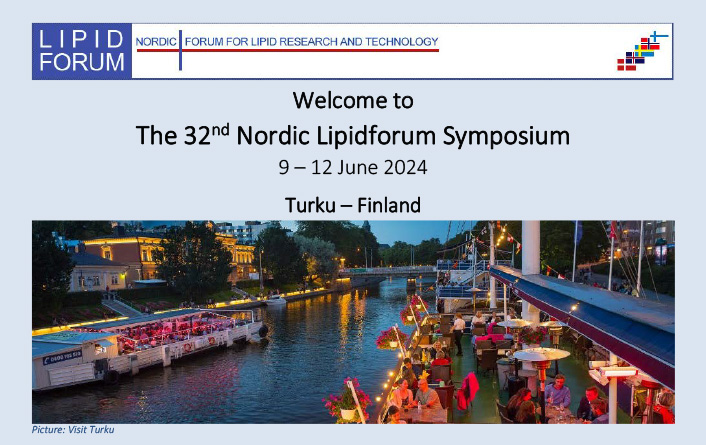
- Nordic
Lipidforum: Mini-symposium
on Lipids in a Developmental Perspective, 8-9 November 2010,
Bergen, Norway
- DGF: DGF-Rapsölmedaille
2010/2011 in Kooperation mit dem
internationalen Gourmet-Journal "Der Feinschmecker"
- DGF: Die DGF
beabsichtigt, weitere geschulte Prüfergruppen für die
Sensorik von Ölen
und Fetten, insbesondere für natives Rapsöl, als DGF-Panel
einzurichten. Interessenten wenden sich bitte an amoneit@dgfett.de
For
more
upcoming events please see the Euro
Fed Lipid
congress
calendar. |

| |
| |
| Impressum:
© Euro
Fed Lipid e.V.
P.O. Box 90 04 40, 60444
Frankfurt/Main
Germany
Phone:
+49 69 79 17 -345, Fax -564
Amtsgericht Frankfurt,
Vereinsregister
VR 12887
Geschaeftsfuehrer: Dr. Frank Amoneit
This newsletter
is sent out monthly to members and friends of the European Federation
for the Science and Technology of Lipids.
To unsubscribe or
to
change your E-Mail address
please contact the headquarters |
|
|